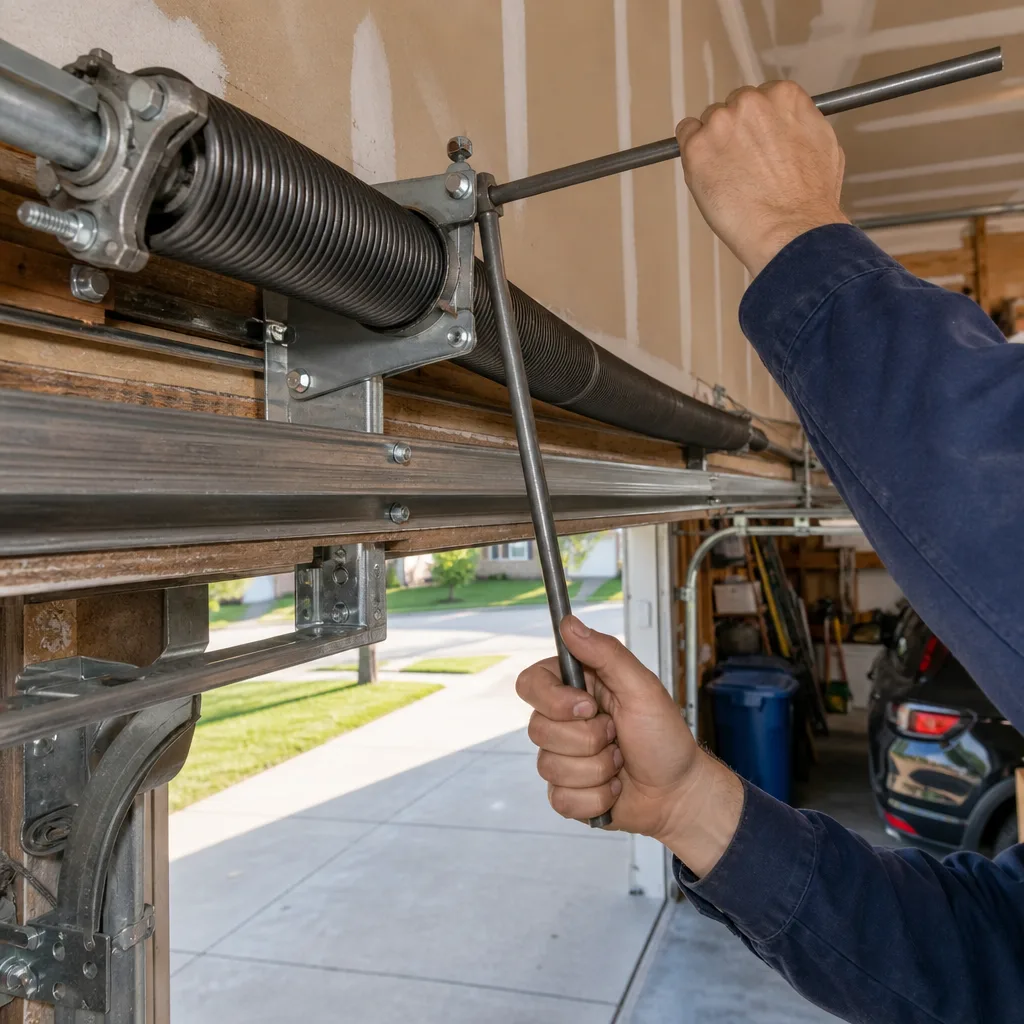
Last updated November 22, 2026
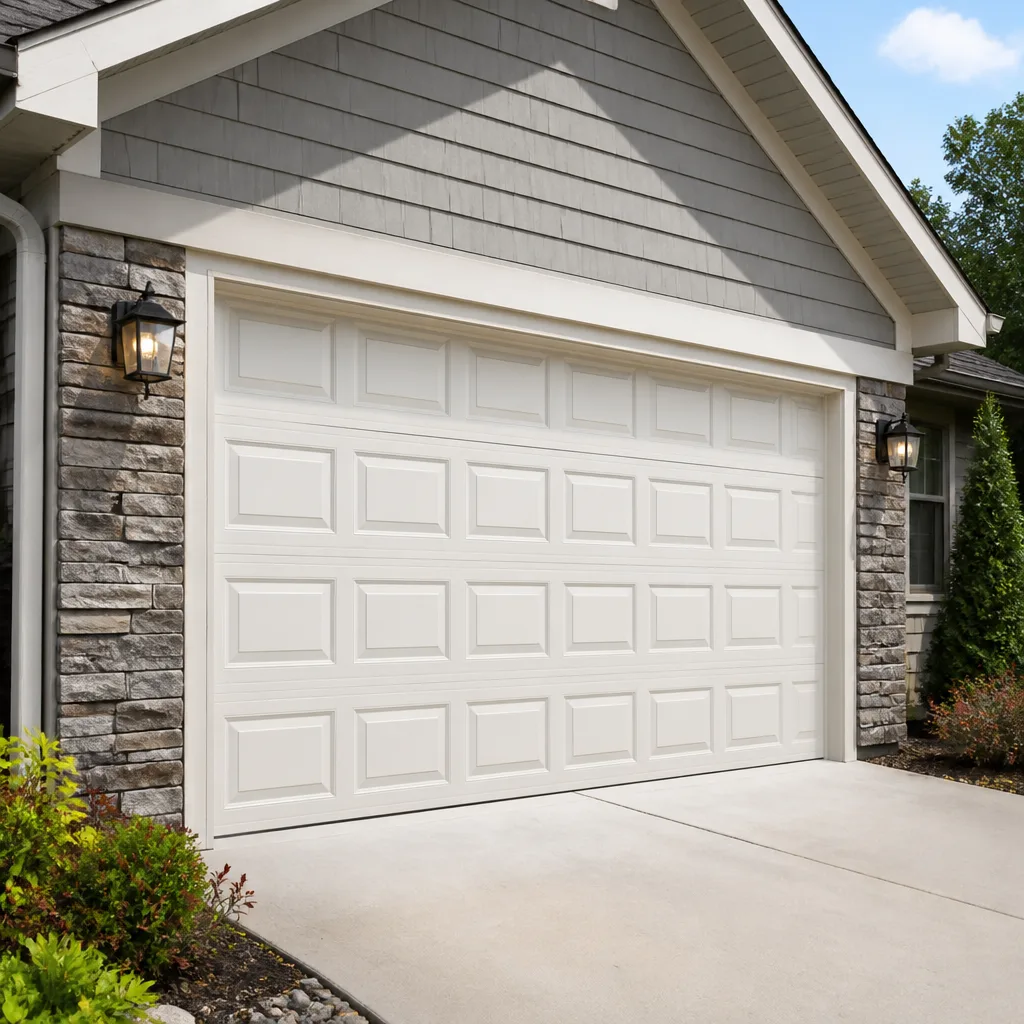 Raised-panel steel
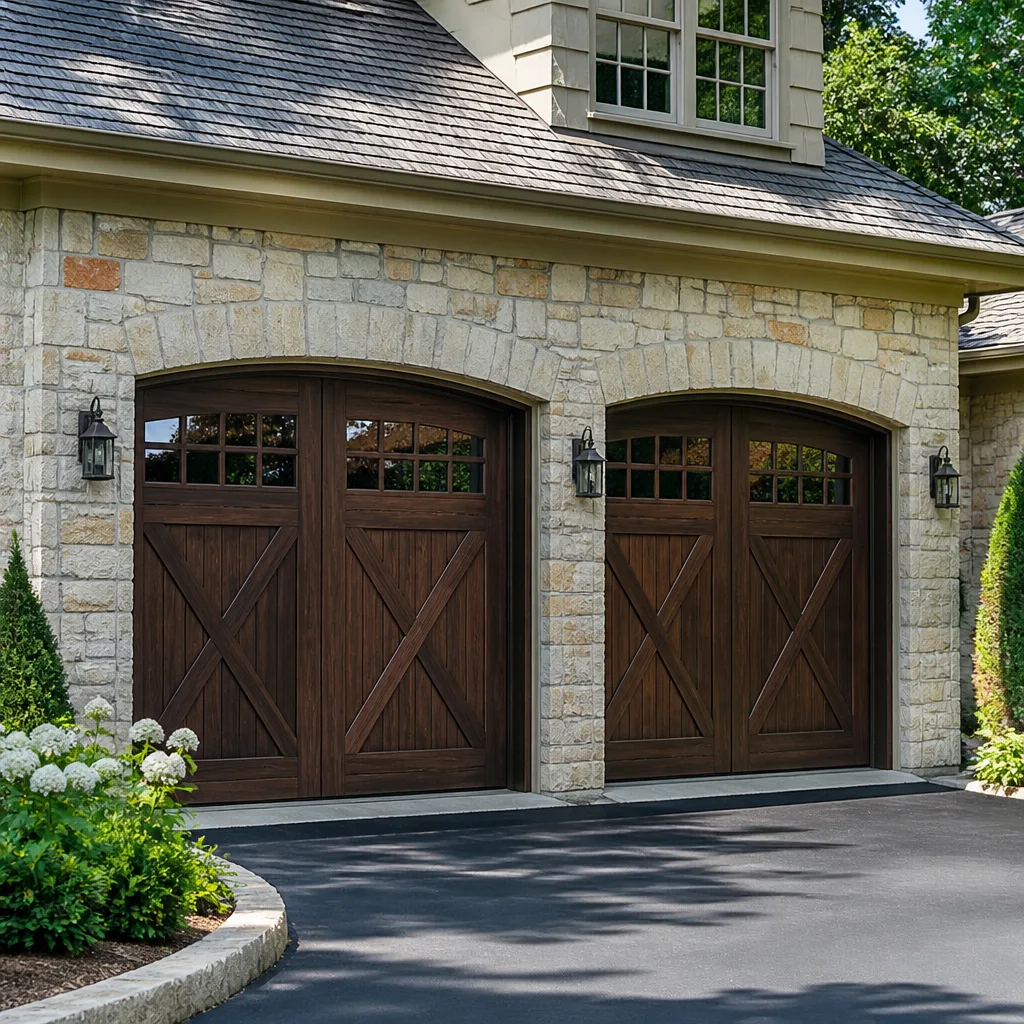 Carriage house
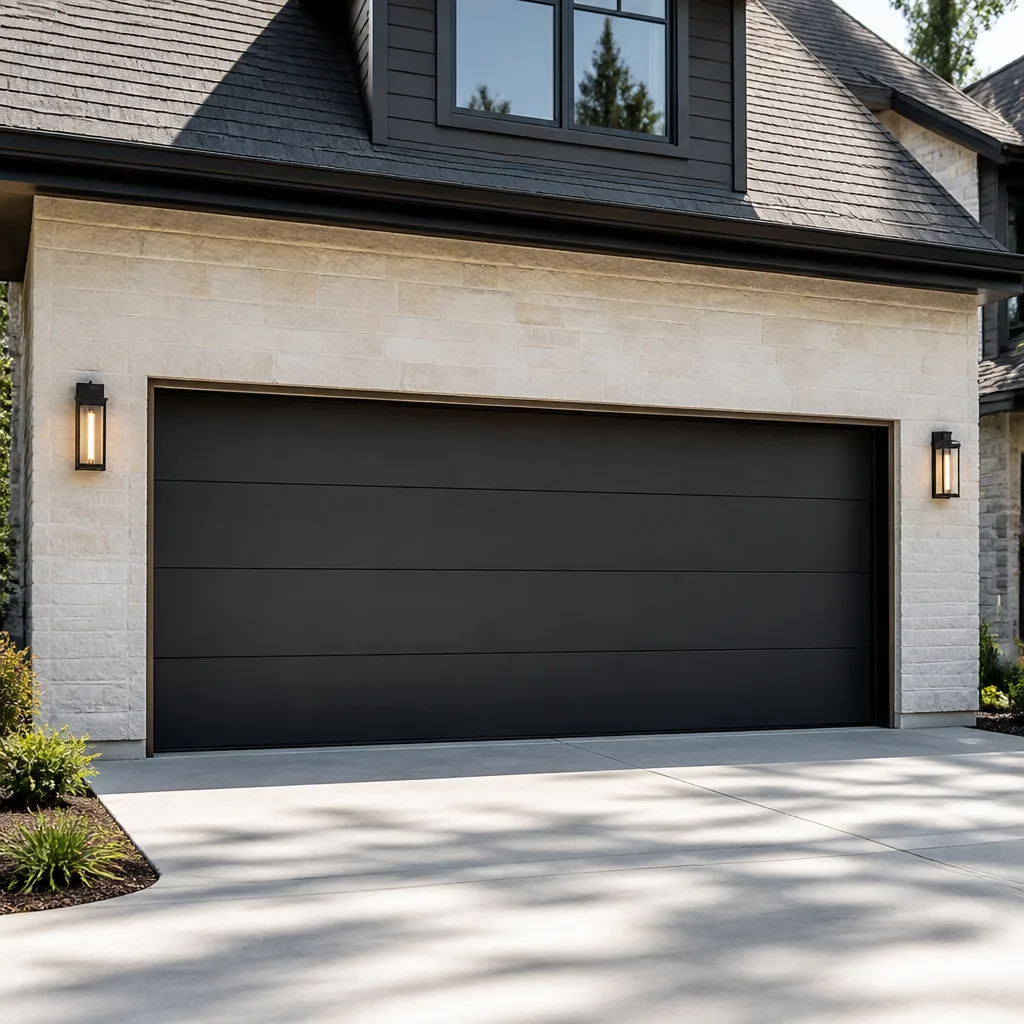 Modern flush
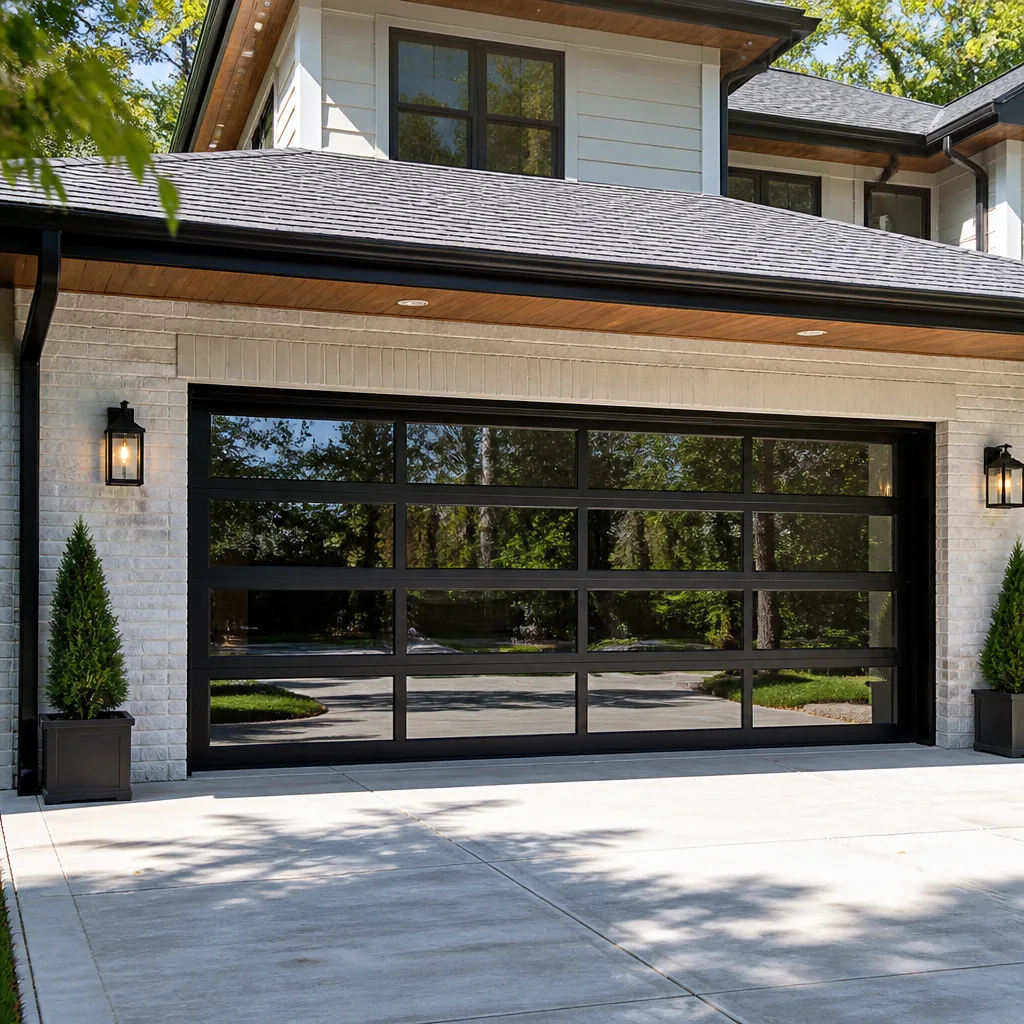 Full-view glass
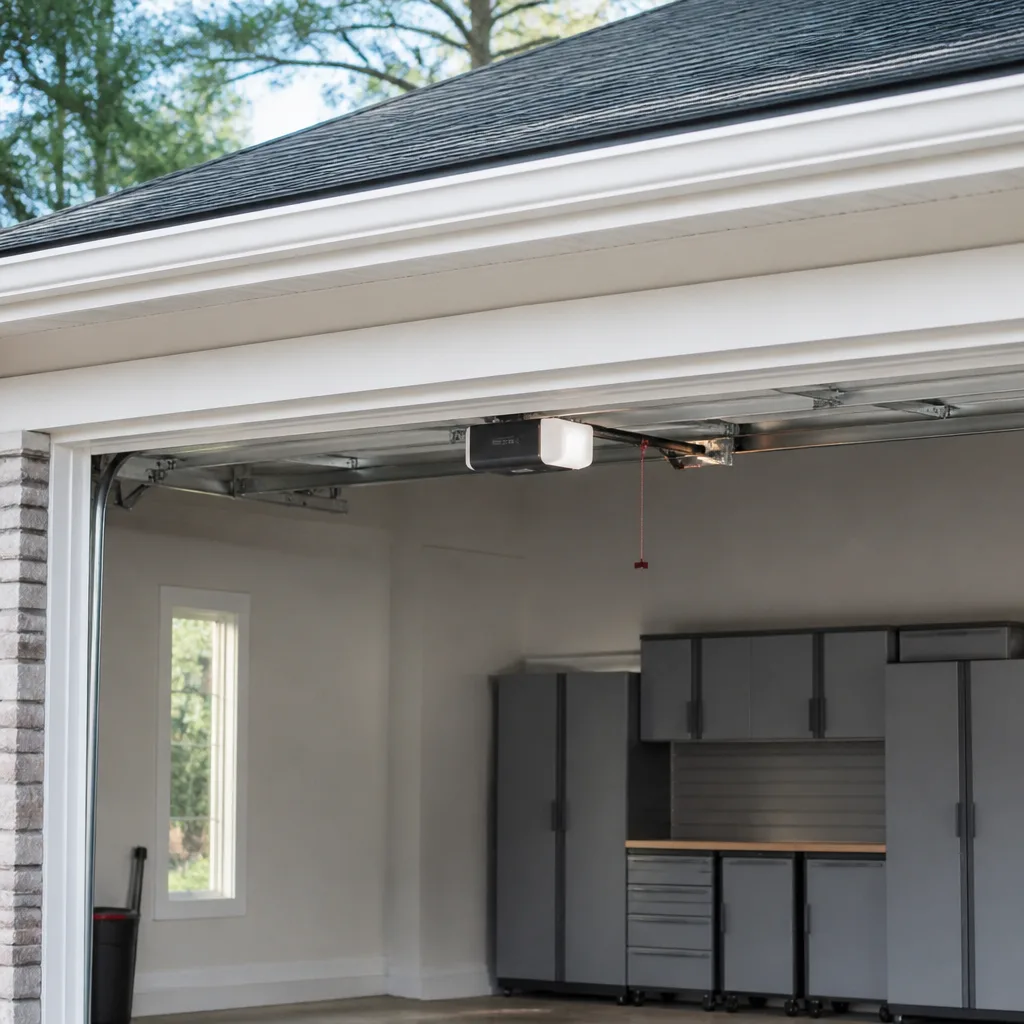 LiftMaster openers
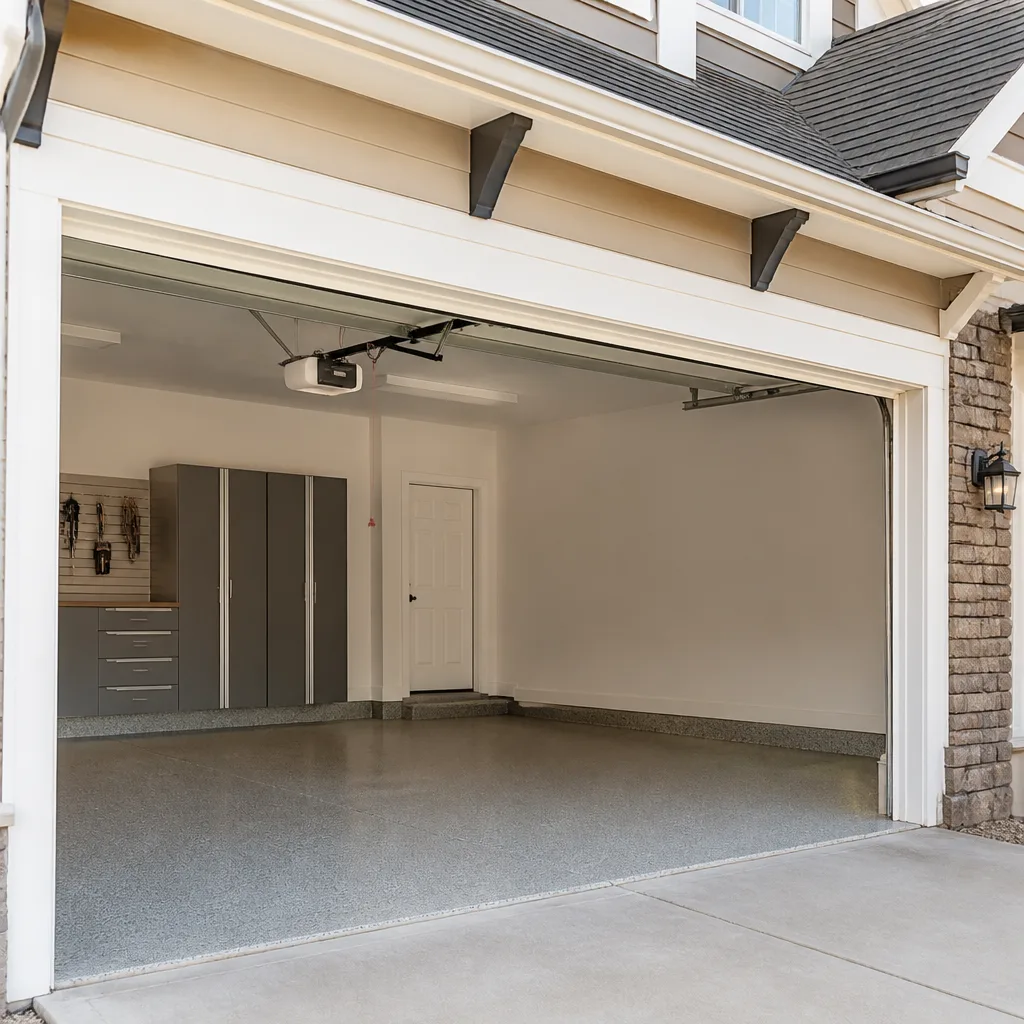 Chamberlain openers
Full 25-point door and opener safety check with every visit - springs, cables, rollers, tracks, and your LiftMaster or Chamberlain opener included
You get a price before we start. It does not change when the pro arrives.
Get your free estimateGarage Door Emergency Preparedness Guide for Uptown Homes
The counterintuitive part of most garage door emergencies is that the door isn’t actually stuck. When a torsion spring snaps, the panel above your head keeps its full weight and nothing counterbalances it anymore. That’s why a door that opened easily yesterday suddenly won’t budge by hand, and why forcing it turns a spring job into a spring, cable, and panel job. The first five minutes after something fails decide how much of the system survives. This guide walks through exactly what to do in Uptown when a spring breaks, a door hangs open, or a door locks shut, plus how to prepare before anything goes wrong.
Quick Answer
A garage door emergency in Uptown is handled in three moves: stop trying to move the door, keep people and vehicles clear of it, and call a specialist who can diagnose the actual failure rather than force the panel. Broken springs, snapped cables, and jammed doors are all mechanical failures where the counterbalance system has lost its tension, and no amount of pulling will fix that safely. Garage Door Repair Uptown handles emergency garage door service for doors stuck open or jammed shut, and we’ll tell you on the phone what to do while you wait.
Styles & brands we work with
- Raised-panel steel
- Carriage house
- Modern flush
- Full-view glass
- LiftMaster openers
- Chamberlain openers
Table of Contents
- The First Five Minutes: Three Emergencies, Three Responses
- Broken Spring: Why the Door Won’t Move and What to Do
- Door Stuck Open in Uptown: Securing It in Winter
- Door Stuck Closed: Getting Your Car Out Safely
- Using the Emergency Release Cord Without Causing More Damage
- Cold-Weather Failures Specific to Uptown Winters
- What to Have Ready Before You Call
- Preparing Your Door Before an Emergency Happens
The First Five Minutes: Three Emergencies, Three Responses
What you do in the first five minutes of a garage door failure determines whether you’re looking at a straightforward spring repair or a door that needs panels, cables, and track work. The instinct to “just get it closed” is the one that costs the most. Here’s how each of the three common emergencies should go.
1. A spring breaks (you hear a loud bang)
- Step away from the door and keep everyone out of the garage bay.
- Do not try to lift the door, even a little, to “see if it still works.”
- Look at the door from a distance. If it’s closed unevenly with one side sagging, the counterbalance is gone.
- Call for service and describe what you heard and what you see.
2. The door is stuck open
- Keep children and pets away from the opening.
- Don’t pull the release cord yet. On a door with a broken spring, releasing the carriage can drop the door.
- Check whether the opener carriage is still attached and whether the door is hanging level.
- Call for emergency service and tell us the door is open, not closed. That changes the urgency.
3. The door is stuck closed
- Try the wall button once. If nothing happens, stop cycling it.
- Check the opener’s light and any error code display before you do anything else.
- Don’t repeatedly press the remote. On a Genie or Chamberlain unit in a fault state, repeated commands just reset the same fault.
- Call and describe what the opener is doing. Many stuck-closed doors are opener problems, not door problems, and those get diagnosed differently.
Every one of these situations is a call to a specialist, not a wrestling match with the panel. For standard repairs with no emergency element, our garage door repair page covers what a normal appointment looks like.
Broken Spring: Why the Door Won’t Move and What to Do
A torsion spring holds the entire weight of the door in tension, and when it breaks, that weight has nowhere to go but down through the panels, cables, and track. This is why a door with a broken spring feels like it’s locked in place: it isn’t stuck, it’s just unsupported. The door may weigh well over a hundred pounds with nothing helping you lift it. It is also one of the most hazardous repairs in the trade, which is why we treat spring work as specialist work and never suggest a homeowner attempt it.
What you should actually do after a spring failure:
- Leave the door where it is. Closed is best; open stays open until a technician arrives.
- Don’t pull the manual release. On a torsion system the release frees the carriage from the opener, not the door from gravity.
- Keep vehicles out from under the door if it’s open.
- Note the sound you heard. A single loud bang usually means one spring broke. A double bang can mean both springs in a pair failed together.
Springs are typically replaced in pairs, not one at a time, because matched springs wear at the same rate. If one has failed, the other is on borrowed time and replacing it separately means paying for the same labor twice. We quote spring work per spring and per pair so you can see the difference before any work starts.
We work on the equipment that’s already in your garage, and spring and cable failures look different on a Clopay door than on an Amarr unit. Knowing the brand and model helps us bring the right parts and get the job diagnosed and completed in a single visit rather than a return trip. Our technicians have up to 12 years of experience with this hardware, and spring repair is a core part of what we do, not something we hand to a generalist.
Door Stuck Open in Uptown: Securing It in Winter
An open garage door in an Uptown January is a heat loss problem and a security problem at the same time. It’s also the situation where homeowners do the most accidental damage, usually by trying to force a door back down onto a track that’s out of alignment. Don’t force it closed. Secure the opening instead, and let a technician fix the door.
You can limit the exposure safely:
- Block the opening from the inside with something movable but substantial, like a vehicle parked just behind the threshold or a piece of plywood leaned against the frame.
- Don’t nail, screw, or brace anything into the door panels themselves. Panels are thin and a failed brace becomes another repair.
- If the door is hanging level and the opener carriage is still engaged, some openers can be cycled closed with the wall button. Try it once. If it doesn’t move smoothly and completely, stop.
- Unplug the opener if children or pets could reach the wall button.
The Uptown housing stock includes a lot of older detached and attached garages where the door may be the only thing separating the alley from the house. If a door is stuck open overnight, that changes the priority from “convenient repair” to “we respond.” A door that won’t close is a security risk, and we schedule accordingly.
If the door is fully closed but won’t open, that’s a different set of steps. Our full garage door opener repair guide covers what to check on the opener itself.
Door Stuck Closed: Getting Your Car Out Safely
A door stuck in the closed position is usually an opener fault, a power issue, or a safety sensor problem, and the last thing you want to do is force it up by hand. If the spring system is intact and the door is balanced, the door should lift with moderate effort once the opener is disengaged. If it doesn’t, the spring is the problem and you should stop.
Here’s the order to check things:
- Look at the opener’s light or display for a fault code. Chamberlain and LiftMaster units in particular show a diagnostic blink pattern that tells you whether the issue is obstruction, sensor, or motor.
- Check the safety sensors at the base of the track. A cobweb, snow crust, or a shifted sensor will hold the door closed.
- Check the breaker if the opener has no power at all.
- If the door is balanced and lifts with moderate hand effort, disengage the release cord and lift it manually.
- If the door is heavy or won’t lift, leave it. The spring system has failed or the door is out of balance.
In Uptown, cold snaps and expanded metal temperatures make track misalignment a common cause of stuck doors, so if the door came down and won’t go back up on a genuinely cold day, the track alignment is worth checking before you assume the opener is dead.
Using the Emergency Release Cord Without Causing More Damage
The emergency release cord does one job only: it frees the door from the opener carriage so you can lift it by hand. It does not release spring tension, and it does not make a heavy door safe to lift. Most of the secondary damage we see comes from a homeowner pulling the cord on a door with a broken spring, feeling the full weight of the panel drop or hang, and then trying to re-engage the carriage by running the opener with the door in the wrong position.
When it’s safe to use:
- The door is fully closed and balanced.
- The spring system is intact, so the door feels light and lifts with controlled effort.
- The opener has failed but the door itself is fine.
When to leave it alone:
- The spring is broken or you heard a snap.
- The door is hanging unevenly.
- The cables look slack, tangled, or off the drum.
- The door is stuck open and you’re trying to close it.
If you do disengage the door, don’t run the opener again until the carriage has been re-engaged with the door in the proper position. Running the opener with no load can send the trolley to the end of the rail, and on some units that requires a manual reset of the travel limits. We’d rather you called and had us walk you through it. Garage doors are all we do, and the phone call is free.
Cold-Weather Failures Specific to Uptown Winters
Uptown garages face real cold, real snow, and a freeze-thaw cycle that works on every moving part on your door. Three failures are so common in winter that they’re worth knowing before they happen.
Frozen bottom seal
The rubber bottom seal can freeze to the concrete slab overnight, and the opener will strain to lift a door that’s physically glued to the floor. If the opener runs and nothing moves, stop and check the seal. Free it with warm water along the base, never with a pry bar under the panel.
Contracted metal and track misalignment
Cold contracts the steel track while the door panels and the framing around the opening move at different rates. A track that was aligned in October can be slightly bound by January. The symptom is a door that grinds, binds, or moves unevenly instead of a clean straight lift. Don’t wrench the track back into place. It’s a two-person alignment job with the right tools, and forcing it can pull the track out of the wall anchors.
Opener motor thermal cutoff
Garage openers have a thermal protection circuit. On a very cold morning, a motor under strain from a frozen seal or a bound track will hit its cutoff, and the opener will simply stop responding until it cools. If you pressed the button several times and the opener went dead, let it rest before you assume it’s broken. If it comes back after a cooldown and fails again, the underlying strain is the real problem and needs diagnosis.
Uptown’s snow and freezing rain also push water against the door seal and into the track, which is why we check weatherstripping and seal condition as part of any winter service call.
What to Have Ready Before You Call
The fastest emergency call is the one where the person on the other end can already picture your door. Having the basics ready cuts down on back and forth and gets a technician scheduled with the right parts. Before you dial, note:
- Door width and height. A rough measurement of the opening is enough. Standard single doors are roughly eight to nine feet wide, doubles sixteen. Bring the actual number if you have it.
- Door type. Sectional, one-piece, roll-up, or carriage style.
- Door brand and opener brand. LiftMaster, Chamberlain, Genie, Clopay, Amarr, Wayne Dalton, Craftsman, and Raynor are the brands we’re factory-familiar with, so naming the one on your opener speeds up the diagnosis.
- Opener model. Usually on a sticker on the back or inside the light cover.
- The symptom in plain words. “Loud bang and now the door won’t move” tells us more than “it’s broken.”
- What you’ve already tried. Did you press the wall button, pull the cord, check the sensors?
- Whether the door is open or closed. This changes the priority of the call.
With those details, we can usually tell you on the phone whether it’s a spring, cable, or opener issue and roughly what the visit will involve. And you’ll get a written price before any work starts, so the number we quote is the number on the invoice.
Preparing Your Door Before an Emergency Happens
Most emergency calls we run in Uptown are for failures that gave warning signs first. Ten minutes a season is enough to catch them. Here’s a simple walk-through you can do yourself:
- Listen to the door. A clean door runs quietly. Grinding, squealing, or a rhythmic scrape means the rollers or track need attention.
- Watch the door travel. It should move smoothly and level. A door that lurches or hesitates is out of balance or binding.
- Test the balance. With the door closed, pull the release cord, lift the door halfway, and let go. A balanced door stays put. If it drops or rises on its own, the springs are wearing unevenly.
- Look at the springs. Torsion springs sit above the door, extension springs run along the sides. Look for gaps, stretching, or rust. Don’t touch them.
- Check the cables. Cables should be taut and seated on their drums. Fraying or slack means replacement is due.
- Test the safety sensors. Break the beam with your foot and the door should reverse. If it doesn’t, the sensors need adjusting.
- Check the seal. Run your hand along the bottom seal for cracks, and check the weatherstripping around the frame.
Anything you find on that list that doesn’t look right is worth a service call before it becomes an emergency. Doors fail in cold weather because the margin that was fine in July is gone by January. If you want to plan ahead for a full replacement rather than another repair, our garage door installation page explains what that process involves. And for a full overview of everything we handle, start with Garage Door Repair Uptown.
Common Mistakes to Avoid
- Trying to lift a door with a broken spring. The door isn’t stuck, it’s unsupported. Lifting it can bend panels, snap cables, and injure you. Leave it where it is and call.
- Pulling the release cord on an open door with a broken spring. The door can drop fast when the carriage lets go. On an open, unsupported door, leave the cord alone.
- Forcing a frozen bottom seal with a pry bar. Pry bars bend panels and crack the seal. Warm water along the base is the safe move.
- Cycling the opener repeatedly on a dead or binding door. Repeated commands won’t force a jammed door to move, and on units with fault protection they just reset the same fault. Press once, check the fault, call.
- Wrenching a misaligned track back into place. Track alignment is a two-person job with the right tools. Forcing it pulls anchors out of the wall and makes the repair bigger.
- Assuming a quiet door is a healthy door. Springs break without warning but wear out slowly. A seasonal listen is cheaper than an emergency visit.
- Not telling the phone representative the door is open. A door stuck open in an Uptown winter is a security and heat-loss problem. Say so, and it gets scheduled that way.
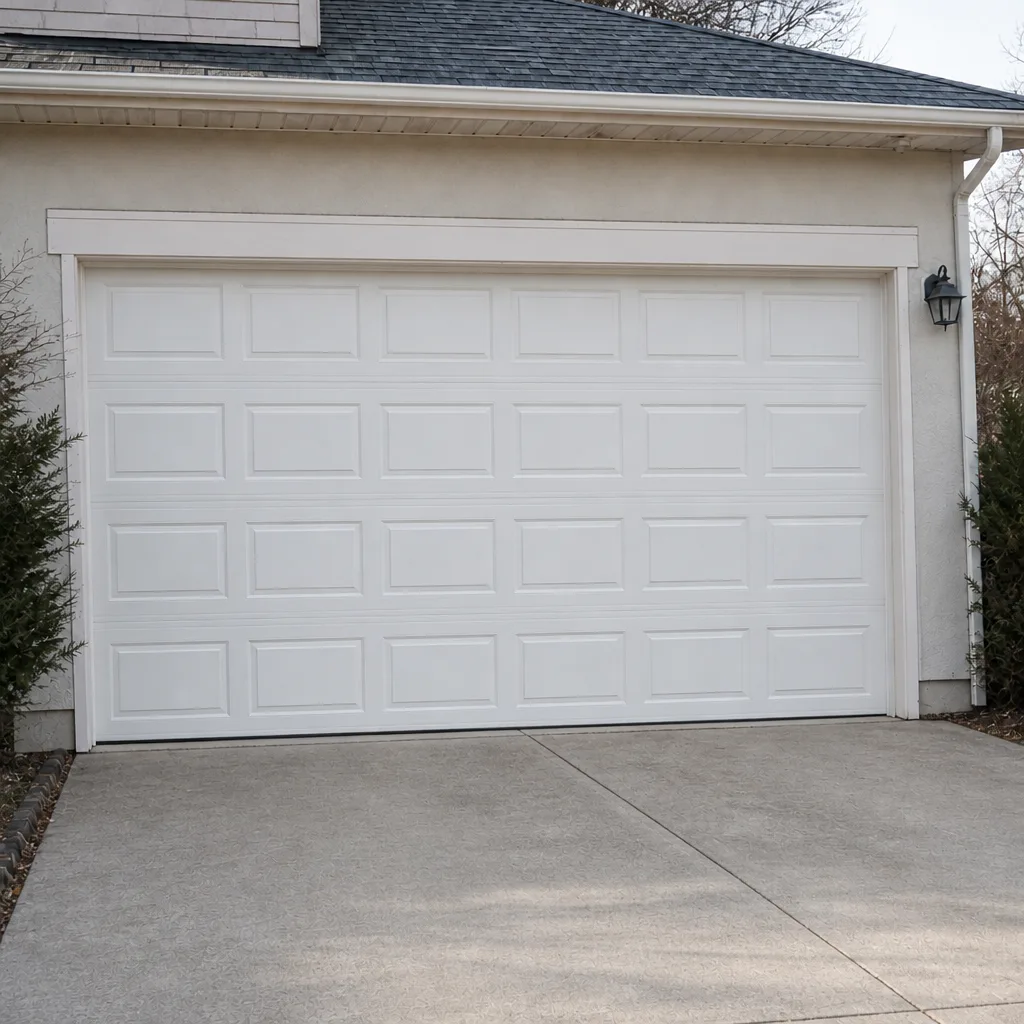
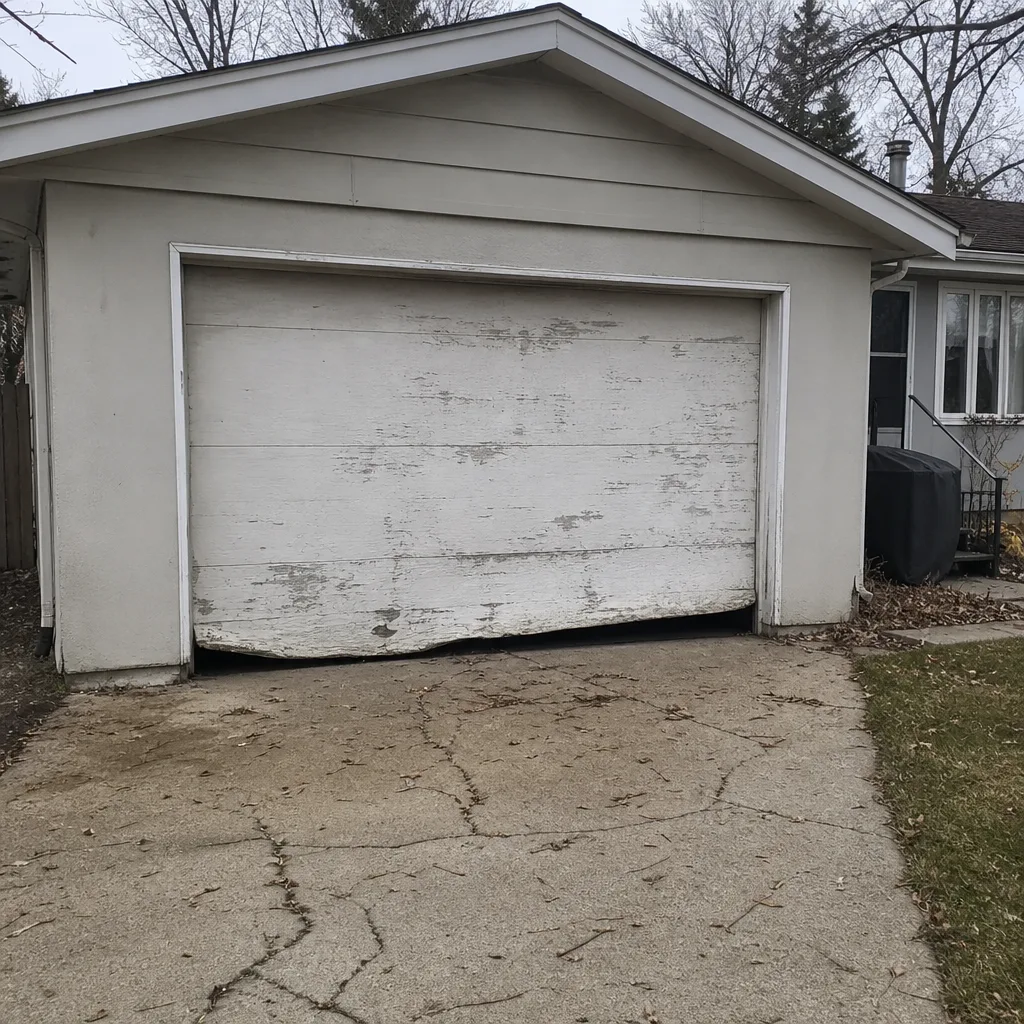
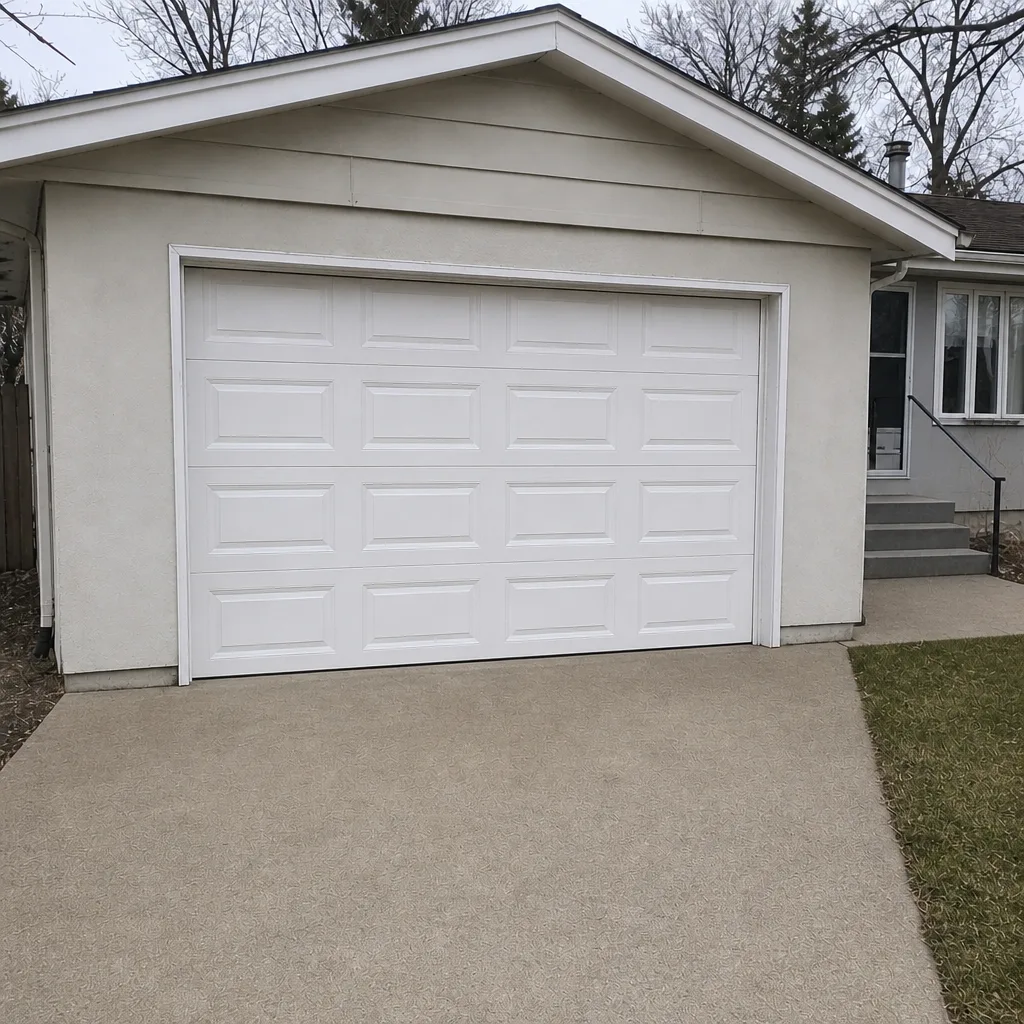
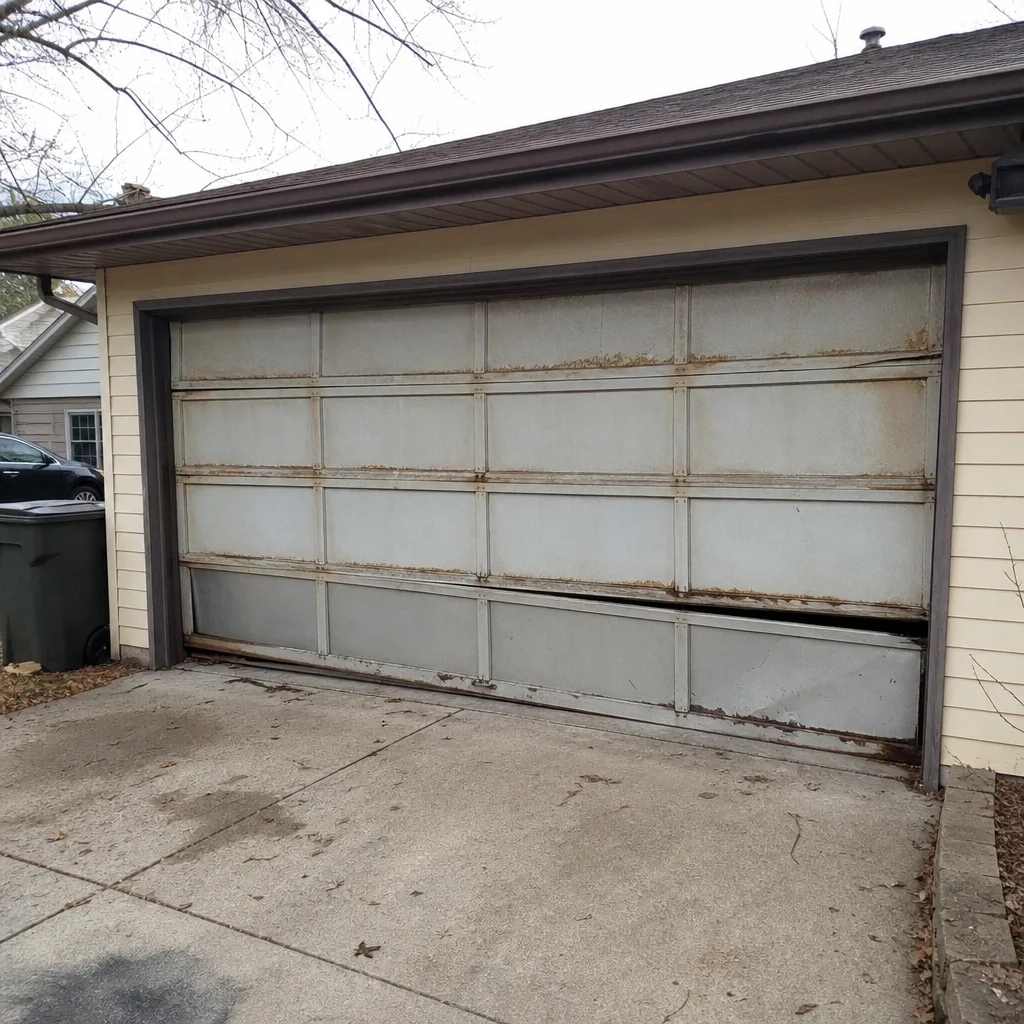
See the difference
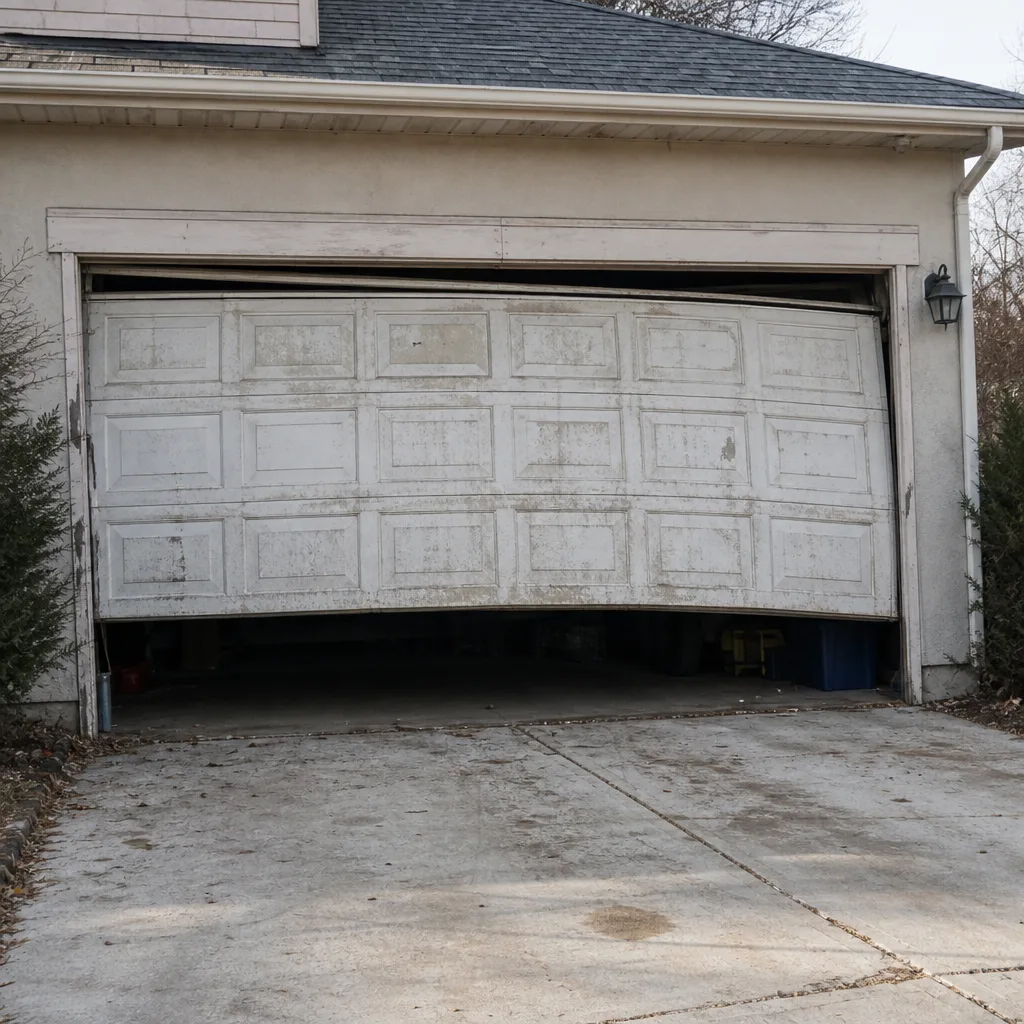 Before
 After
 Before
 After
 Before
 After
When to Call a Professional
Call for any spring or cable failure, any door that won’t move under hand effort, any door that hangs unevenly, and any opener that’s dead or faulting after a cooldown. Those are situations where guessing costs more than fixing. Call immediately if the door is stuck open overnight, if a vehicle is trapped and you need to get out, or if you heard a loud snap. We handle emergency garage door service alongside standard repairs, opener work, springs, and installation, all under one company, so you’re never handed to another contractor mid-problem. Garage Door Repair Uptown offers free estimates in Uptown. Call (855) 337-1679, and we’ll tell you what to do while you wait.
Frequently Asked Questions
An emergency is any door condition that creates a security, safety, or access problem you can’t leave overnight: a door stuck open, a door jammed closed with a vehicle trapped, a broken spring on a door you need to use, or a snapped cable. A noisy door or a slow opener isn’t an emergency, but it’s worth a scheduled call before it turns into one. Call (855) 337-1679 and describe the situation, and we’ll tell you whether it needs emergency response or a normal appointment.
Emergency garage door calls get priority scheduling, and in most cases we can respond to a stuck-open or jammed-shut door the same day you call. We aren’t a 24-hour operation by the clock, so the fastest path to an answer is a phone call. Call (855) 337-1679 and we’ll book you in as soon as we can get a technician to you.
A loud bang is almost always a torsion spring breaking, and once it breaks, the door has nothing holding its weight but you. That’s why the door feels locked in place rather than loose. Don’t try to lift it. Call (855) 337-1679 for spring repair, and we’ll tell you whether the door should stay where it is until we arrive.
You can pull the cord safely if the springs are intact and the door feels balanced and light when you lift it by hand. If the spring has broken or the door is heavy and hangs unevenly, don’t pull the cord, because the door can drop once the carriage releases. If you’re not sure, call us and we’ll walk you through the check on the phone. Call (855) 337-1679.
Don’t run the opener and don’t pry under the panel. Free the bottom seal with warm water poured along the base and give it time to release. If the door still won’t lift after that, the seal isn’t the problem and the springs or track need a look. Call (855) 337-1679 and we’ll diagnose it.
No, not on a proper job. We quote in writing after diagnosing the problem and before any work starts, and that written estimate is the price. If we find something the phone call couldn’t reveal, we tell you what it is and what it costs before we go ahead, so there’s no invoice surprise. Call (855) 337-1679 for a free estimate.
The Bottom Line
A garage door emergency in Uptown comes down to three things: recognizing that a broken spring means an unsupported door, not a stuck one; resisting the urge to force anything frozen, bound, or misaligned; and calling a specialist early rather than after the damage is done. A door stuck open in an Uptown winter needs securing and a fast response, and a door stuck closed usually needs an opener diagnosis before anything else. Have your door measurements, brands, and symptoms ready, and know that the written estimate you agree to is the price you pay.
If your door is stuck open, jammed shut, or making a sound it shouldn’t, call (855) 337-1679 for a free estimate. Stuck open. Stuck shut. We respond.
Written by the team at Garage Door Repair Uptown.