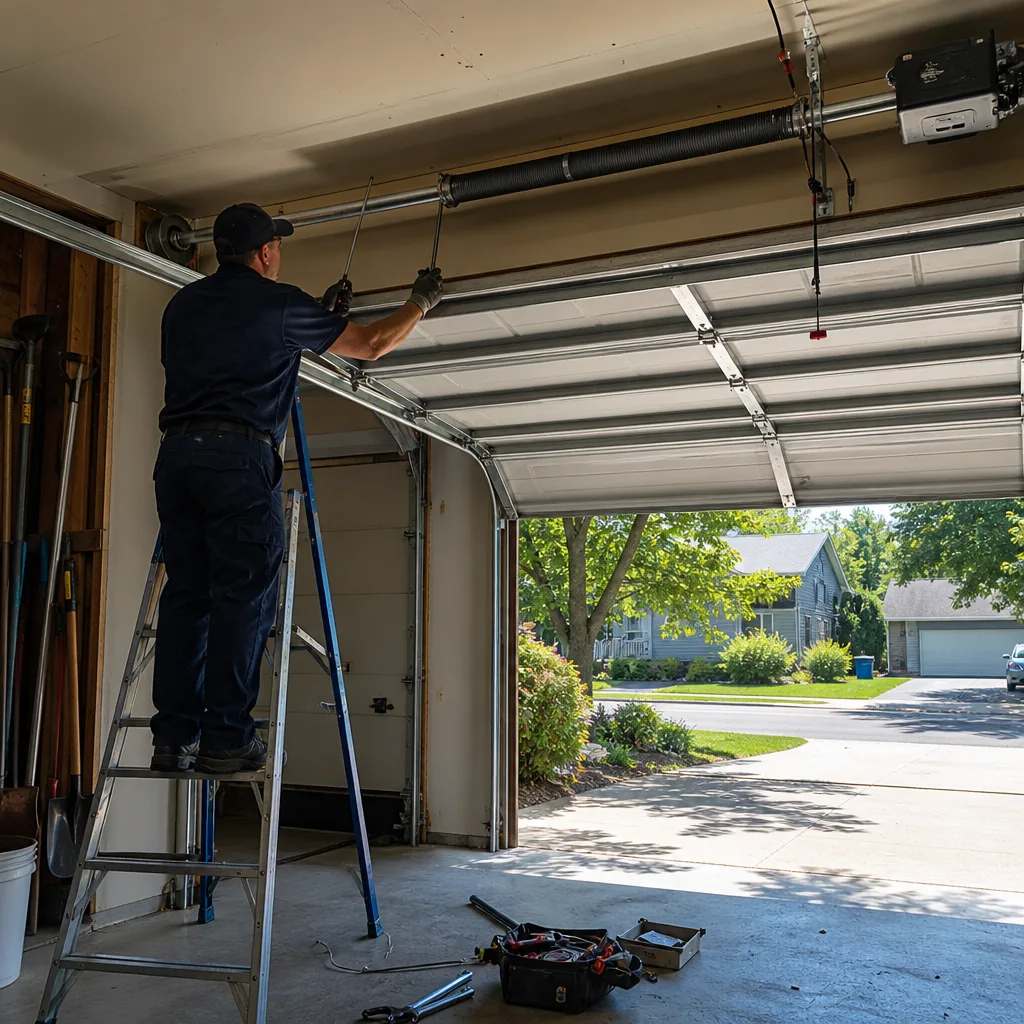
Last updated November 22, 2026
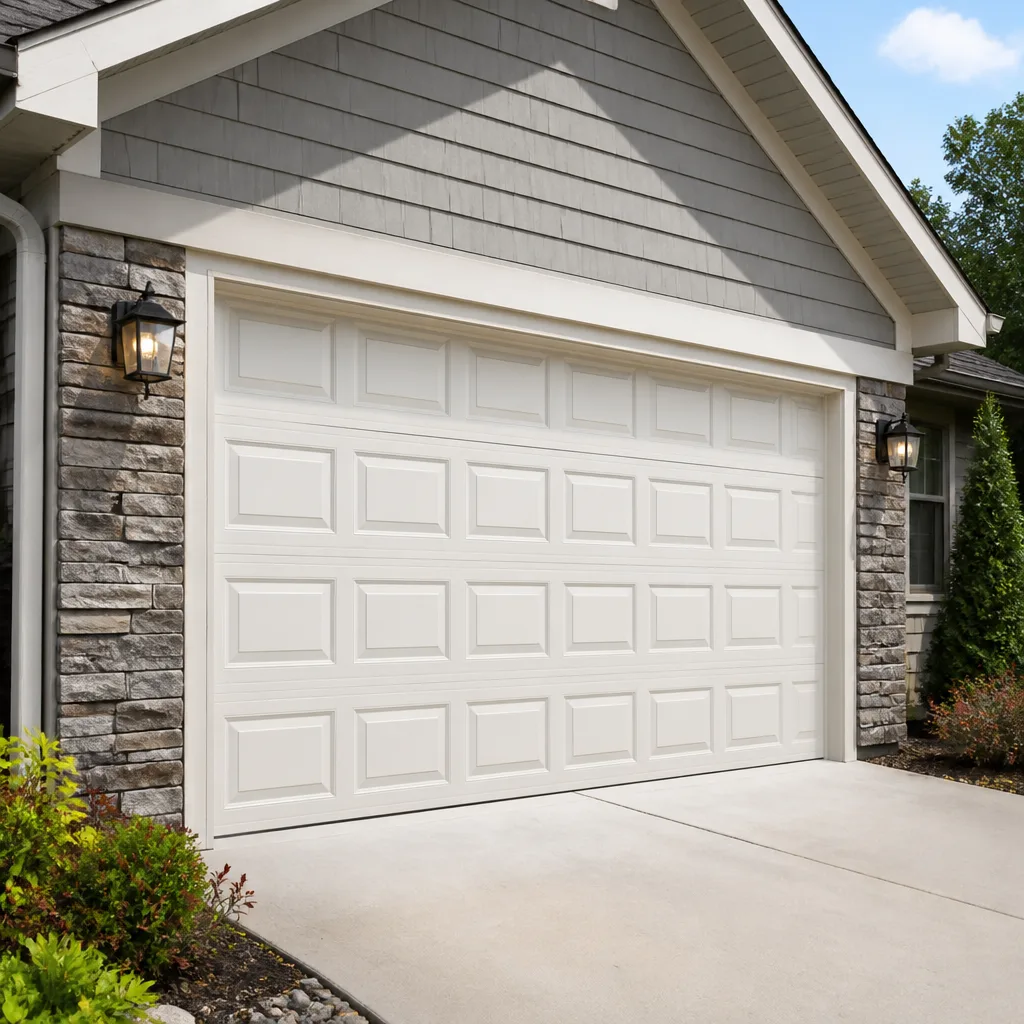 Raised-panel steel
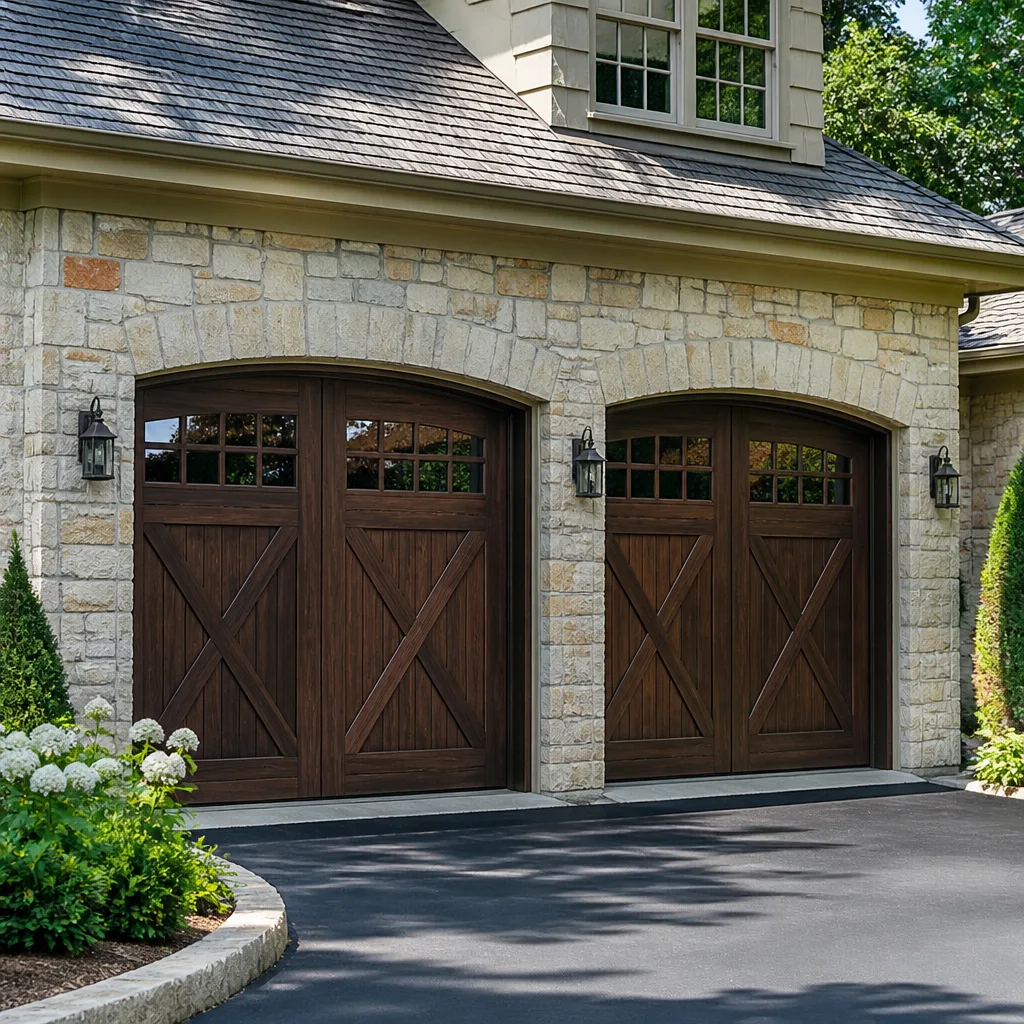 Carriage house
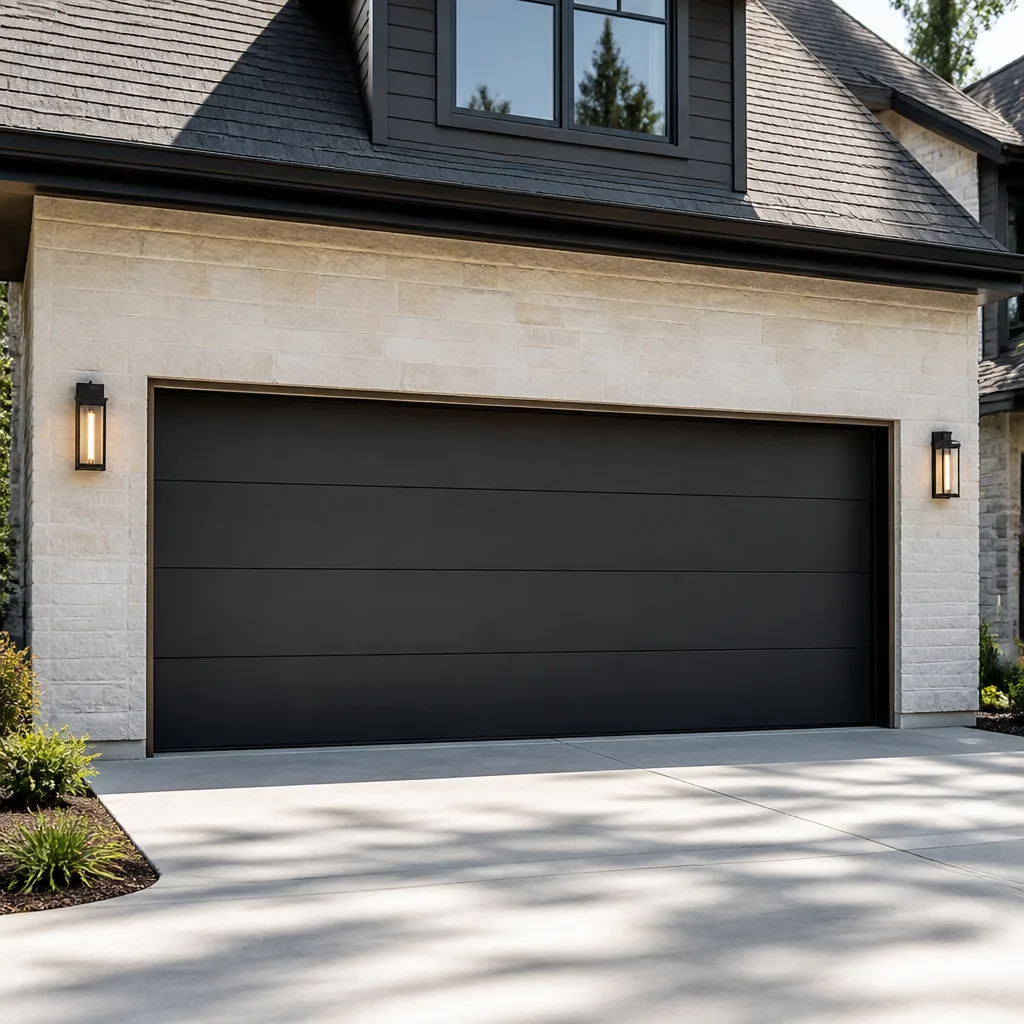 Modern flush
 Full-view glass
 LiftMaster openers
 Chamberlain openers
Full 25-point door and opener safety check with every visit - springs, cables, rollers, tracks, and your LiftMaster or Chamberlain opener included
You get a price before we start. It does not change when the pro arrives.
Get your free estimateDIY vs Professional Garage Door: The Uptown Homeowner’s Decision Guide
The garage door is the one machine on your property that can hurt you badly enough to land you in an emergency room, and it’s the one most homeowners are tempted to fix themselves. The surprising part isn’t that people try. It’s that a lot of garage door work actually is reasonable DIY – and the exceptions cluster around one or two high-energy parts. In Uptown, where many garages predate the doors now hanging in them, those exceptions come up more often than a national how-to video would have you believe. This guide draws a clear line: what you can safely handle, what you shouldn’t touch, and how to use a professional visit without paying for work you could do yourself.
Quick Answer
Most garage door maintenance – weatherstripping, lubrication, balancing a safety sensor, tightening routine hardware – is genuinely safe to do yourself. Spring, cable, and structural hardware work is not, because those components hold stored mechanical energy that can release violently with no warning. The honest DIY-versus-professional question isn’t about your skill level. It’s about which specific tasks carry risk out of proportion to the money you’d save, and spring work is the clearest dividing line. For anything on the wrong side of that line, call (855) 337-1679 for a free estimate.
Styles & brands we work with
- Raised-panel steel
- Carriage house
- Modern flush
- Full-view glass
- LiftMaster openers
- Chamberlain openers
Table of Contents
- The Real Question Isn’t Skill – It’s Stored Energy
- A Task-by-Task Breakdown: What’s Safe to DIY
- The Tool and Knowledge Threshold for Each Repair Category
- Why Uptown’s Older Garages Raise the DIY Risk Profile
- The Hidden Cost of a DIY Spring Job Gone Wrong
- How to Use a Professional Visit Strategically
- Why Brand Familiarity Matters More Than You’d Think
- A Simple Maintenance Schedule Uptown Homeowners Can Keep
The Real Question Isn’t Skill – It’s Stored Energy
Torsion and extension springs exist to do one job: counterbalance the weight of a door that can top a couple hundred pounds. To do that, a spring is wound tight and holds that tension the entire time the door sits closed, open, or anywhere in between. The tension doesn’t know whether a trained technician or a homeowner with a socket set is standing underneath it.
That’s why spring replacement sends an estimated 30,000 people to emergency rooms around the country each year. It isn’t carelessness. It’s the physics of a wound spring forgiving setup errors far less than most home repairs do. If you disconnect a hinge or pull a bracket the wrong way on a shelf, you get a crooked shelf. If a torsion spring lets go during an improper adjustment, the bar and winding hardware move with force you can’t react to in time. Cables under load behave the same way.
This matters for framing the whole DIY discussion. Most home improvement advice is about capability – can you do this? Garage door work splits differently. Some tasks are capability questions. A few are physics questions where capability doesn’t enter into it, because there’s no safe way for an untrained person to be near the component while it’s under tension.
So treat the two categories differently. Weatherstripping, lubrication, sensor alignment, and visual inspection are maintenance. They reward patience and a few basic tools. Springs, cables, bottom brackets, and the structural hardware that holds them are mechanical systems that demand the correct winding bars, a proper understanding of the sequence, and the willingness to stop before something releases. Our technicians have up to 12 years of experience, and even they treat spring work with the same caution every time.
A Task-by-Task Breakdown: What’s Safe to DIY
Here’s the honest split. We’re not going to tell you everything requires a professional, because that isn’t true and you’d see through it. A lot of what keeps a door running smoothly is well within reach of a careful homeowner.
Genuinely safe to DIY
- Weatherstripping and bottom seals. Replacing a worn bottom seal or the perimeter weatherstripping is a straightforward job with basic hand tools. It’s one of the highest-return maintenance tasks you can do, and it doesn’t involve any load-bearing hardware.
- Lubrication. A garage door has rollers, hinges, and a track that benefit from periodic lubrication with the right product. This keeps things quiet and reduces wear. No danger here.
- Safety sensor alignment. The photoelectric sensors near the floor need to face each other and stay clear. If your door reverses for no reason, a misaligned or dirty sensor is often the cause, and adjusting one is safe and simple.
- Track cleaning and light debris removal. Clearing grit, leaves, and cobwebs from the tracks keeps rollers moving cleanly. Don’t bend the track to force an adjustment – that’s where DIY starts to go wrong.
- Visual inspection. Look at springs for gaps or wear, check cables for fraying, and listen for new noises. Noticing a problem early is free and safely done.
- Testing the auto-reverse. Placing a board in the door’s path to confirm it reverses is an important safety check any homeowner can perform.
Requires professional handling
- Torsion and extension springs. The highest-risk component in the whole system. Under constant tension, and unforgiving of setup errors.
- Cables. Also load-bearing. A cable can snap with force, and replacing one requires releasing the tension safely first.
- Bottom brackets and drums. These anchor the cables and carry tension. Adjusting them without an understanding of the full system is how people get hurt.
- Panel replacement and structural repair. Sections weigh more than they look, and improper alignment stresses the whole assembly.
- Opener motor, gear, and circuit-board work. Partly electrical, partly mechanical. Misdiagnosis here often damages a working opener.
If you’re weighing a specific task and you’re unsure which column it belongs in, that’s your answer. Ask. For anything on the load-bearing side, we can take a look and quote the job before any work begins.
The Tool and Knowledge Threshold for Each Repair Category
National how-to guides tend to assume a garage door is a garage door. It isn’t, and the tool and knowledge threshold shifts significantly depending on the category of work. Here’s a rough benchmark so you can judge honestly where your own comfort level sits.
Category 1: Cosmetic and sealing work
A tape measure, a utility knife, a screwdriver, and a ladder. That’s genuinely it for weatherstripping and seals. The knowledge threshold is low – read the instructions on the seal you buy, work section by section, and you’ll get a clean result. If you can hang a shelf, you can re-seal a door.
Category 2: Lubrication and adjustment
You’ll want the correct lubricant (not WD-40 on the moving parts – that’s a solvent, not a lasting lubricant), a rag, and a little patience. Adjusting safety sensors takes a screwdriver. The knowledge threshold here is mostly about distinguishing what to adjust from what to leave alone. Nudging a sensor is fine. Bending a track to force a door to sit straight isn’t, because the bend introduces new alignment problems and stresses the rollers.
Category 3: Load-bearing mechanical work
This is where the threshold jumps. Springs, cables, and drums require specific tools – winding bars sized to the spring, not a random screwdriver – plus the knowledge to release tension in the right order and understand what the door is doing during the process. Winding a torsion spring isn’t like tightening a bolt. There’s a sequence, a count, and a correct stopping point, and getting any of them wrong is how injuries happen. No amount of YouTube familiarity closes that gap, because the gap isn’t information. It’s hands-on repetition with a component that punishes inexperience.
Category 4: Opener electronics
Diagnosing an opener combines mechanical and electrical reasoning. Is the problem the wall button, the remote, the safety sensor, the logic board, or the gear? A homeowner can rule out the battery and the sensor. Beyond that, misdiagnosis gets expensive because swapping parts to see what works often means replacing something that was fine. We work on the brand already in your garage, which is how the diagnosis gets efficient – the failure points of a Chamberlain or a Genie aren’t the same as a Clopay or an Amarr setup, and knowing the specific system saves guesswork.
Why Uptown’s Older Garages Raise the DIY Risk Profile
National garage door guides imagine a clean, standard install: uniform tracks, matching hardware, a door that was installed to a spec sheet. A lot of Uptown garages don’t look like that drawing. The neighborhood has housing stock that spans more than a century, and garages in Uptown have been retrofitted, converted, re-sided, and re-hung over the years. What was original hardware sometimes coexists with a newer door or a modern opener, and the two weren’t designed with each other in mind.
That mismatch is exactly where DIY risk compounds. Here’s what we see in Uptown garages and why it matters:
- Non-standard door widths and heights. When a door is a custom size, off-the-shelf replacement parts don’t fit cleanly. A homeowner ordering a spring or bracket by sight often gets the spec slightly wrong, and slightly wrong on a load-bearing part is the danger zone.
- Mixed-era hardware. Original tracks with newer rollers, or a modern opener bolted to older mounting hardware, creates a system no manual describes as a whole. Diagnosis requires understanding the whole assembly, not just one component.
- Cold winters that stress springs. Uptown’s winter temperature swings cycle a spring through contraction and expansion many times a season. That fatigue often shows up as a spring that fails on the coldest morning of the year, when a homeowner is most tempted to grab tools and deal with it fast. Cold makes metal more brittle, and it makes the timing worse.
- Attached vs. detached garages with different clearances. Older Uptown homes sometimes have low-clearance or tight-headroom garages where the torsion bar and drum sit closer to the ceiling and the installer’s working space. DIY work in a tight space with an overhead load is a different proposition than a roomy two-car bay.
None of this is a knock on Uptown’s housing. It’s character, and we like working on it. But it does mean that advice written for a standard suburban garage doesn’t automatically apply in Uptown. When in doubt on something load-bearing, that Uptown-specific complication is your reason to pause. You can always ask a specialist before you buy anything.
The Hidden Cost of a DIY Spring Job Gone Wrong
A lot of DIY decisions are made by comparing the price of a part to the price of a repair. That math misses everything that happens when a spring job goes sideways. The cost of a failed DIY attempt isn’t the part. It’s the sum of the things the failure drags in.
- An injury. This is the one that matters and it’s the reason we frame spring work as a safety line, not a skill test. A released torsion spring or snapped cable can cause serious hand, arm, and face injuries. Emergency care is expensive, painful, and it doesn’t finish the repair.
- A damaged door panel. When a partially disconnected door becomes unbalanced, sections twist and bend. A single panel replacement can cost more than the spring repair ever would have.
- A damaged opener. If a door is left unbalanced and the opener keeps trying to lift it, the motor, gear, and rail take strain they weren’t built for. That turns a spring repair into a spring repair plus an opener repair.
- Professional extraction of a failed install. Finishing a job someone else got partway through – and correctly releasing a half-wound spring or a door stuck at an odd position – is more involved than a clean start. That makes it more expensive, not less.
- The day off. A door jammed shut means the car stays in the garage and your plans change. A stuck-open door means your house is open to the street until it’s fixed. Neither is easy to price, but both are real.
The pattern is consistent: the savings from a DIY spring job are small compared to the downside of getting it wrong. That’s why we take spring repair seriously as a service. It’s one of the most technically demanding garage door jobs, and it’s a core offering because it’s the one most worth doing right. For the safer side of the work, our partners handle garage door repair of all kinds, and we can coach you on what to maintain afterward either way.
How to Use a Professional Visit Strategically
Here’s an underused idea. A professional visit doesn’t have to be all-or-nothing – either you do the whole job or you pay someone to do everything. The most economical approach for a careful Uptown homeowner is often a hybrid: hands off the dangerous work, hands on the maintenance, and a bit of coaching in between.
Think of it as putting a specialist’s knowledge to work on the two things that actually justify the visit.
- Hand off the load-bearing work. Springs, cables, and structural hardware are handled by someone who does this every working day. That’s the part where the cost of professional handling is well spent – not because you can’t learn it, but because the downside of learning it on your own door is disproportionate.
- Ask for a walkthrough while the technician is there. This is the part people leave on the table. Ask the technician to show you which parts you can safely maintain, how to test the auto-reverse, what a worn spring actually looks like, and which noises mean “call us” versus “lubricate me.” A good technician would rather spend five minutes explaining this than get called back to your door later.
- Build a maintenance routine from the visit. Once you know what to lubricate and what to inspect, you can keep the door in shape yourself between professional visits, cutting future costs.
- Have the opener checked at the same time. If you’re already having spring work done, it’s efficient to have the opener looked at, since the two systems interact. If the opener needs attention, we cover garage door opener repair too, so you’re not coordinating a separate contractor.
This hybrid approach is especially good for Uptown homes with older or non-standard garage setups. The specialist handles the high-risk, non-standard components; you keep up the routine maintenance. You get professional safety where it counts and keep the easy work for yourself.
Why Brand Familiarity Matters More Than You’d Think
When you’re weighing DIY against professional help, brand familiarity is easy to overlook because it doesn’t sound like a safety issue. But it drives real differences in diagnosis, parts, and outcomes across the brands running in Uptown garages.
A Chamberlain and a Genie opener don’t fail the same way. A LiftMaster wall-mount and a chain-drive unit take different diagnoses. Clopay and Amarr doors have their own panel profiles and hardware conventions, and a Wayne Dalton or Raynor setup might be built around a particular mechanism that a generalist has never opened. If a technician is reading the manual for the first time in your garage, that’s your money and your afternoon.
We work on the brand already in your garage because it shortens the distance between “something’s wrong” and “here’s the fix.” Being factory-familiar with LiftMaster, Chamberlain, Genie, Clopay, Amarr, Wayne Dalton, Craftsman, and Raynor isn’t marketing framing – it’s how diagnosis gets efficient and how parts get matched correctly the first time. That matters for you even if you do most of your own maintenance, because when something does need professional attention, the person arriving should already know your system.
The flip side is worth stating too. If you call around and a contractor doesn’t recognize the brand on your door or opener, that’s a useful signal. Garage doors are all we do, and the brand knowledge is part of why. For a full replacement or new door, that same familiarity comes into play during measurement, sizing, and choosing a door that fits an Uptown garage’s actual clearances – more on that in our garage door installation overview. For an emergency on a stuck door, the brand knowledge is what gets the diagnosis fast. Our partners through Garage Door Repair Uptown handle open and jammed-shut doors as well, so “stuck open, stuck shut” gets a real response.
A Simple Maintenance Schedule Uptown Homeowners Can Keep
The best defense against a big repair is small, consistent upkeep. Here’s a routine that stays on the safe side of the DIY line and takes very little time.
- Monthly: Test the auto-reverse with a board across the threshold. Wipe down the safety sensors and make sure their lights are on. Listen for new sounds – grinding, squealing, or banging.
- Monthly in winter: Look at the springs and cables after cold snaps. Uptown’s temperature swings stress metal, and a fatigued spring often announces itself in the coldest part of the season. Don’t touch it – just notice and schedule.
- Every few months: Lubricate the rollers, hinges, and track. Wipe away grit. Check the weatherstripping along the bottom and sides for cracks or gaps.
- Before winter and after: A quick visual inspection of the whole door – springs, cables, brackets, and panel edges – and a test of the balance by disconnecting the opener and lifting the door halfway (this is safe as long as the springs are intact; if the door feels unusually heavy, stop and call).
- Annually: Have the full system looked at by a specialist. A small issue caught during a routine look is far cheaper than the same issue diagnosed when the door has stopped working.
None of this requires special tools beyond lubricant, a rag, and a board for the reverse test – which is the point. The routine maintenance stays in your hands. The mechanical work that can genuinely hurt you stays with a specialist.
Common Mistakes to Avoid
- Treating a spring like a nut and bolt. A torsion spring is under constant tension, and winding or unwinding it without the right tools and sequence is the single most dangerous mistake in garage door work. This one isn’t about skill – it’s about physics that punishes setup errors.
- Using the wrong lubricant. WD-40 is a solvent, not a lasting lubricant. It’ll quiet a hinge for a day and then attract dust. Use a proper garage door lubricant on the moving parts, and keep the track dry and clean.
- Bending a track to fix a sticking door. A bowed track is usually a symptom of an alignment problem, not the cause. Forcing the track back introduces new stress on the rollers and the door’s balance, and it can turn a small fix into a panel replacement.
- Ordering a part by sight in an older Uptown garage. Custom door sizes and mixed-era hardware are common here, and an off-by-a-fraction part on a load-bearing component is dangerous. Measure carefully or have a specialist spec it.
- Ignoring a heavy door. If your door has become noticeably heavy, that’s a failing spring, not a tired arm. Don’t keep running it through the opener while it’s unbalanced – you’ll damage the opener and the door.
- Letting a stuck door sit open. In Uptown, an open garage door is an open house to the street. If it’s stuck open and you can’t close it safely, that’s an emergency call, not a wait-until-tomorrow problem.
- Swapping opener parts to see what works. This is how a working part ends up replaced and the real fault stays. Diagnose first, replace second.
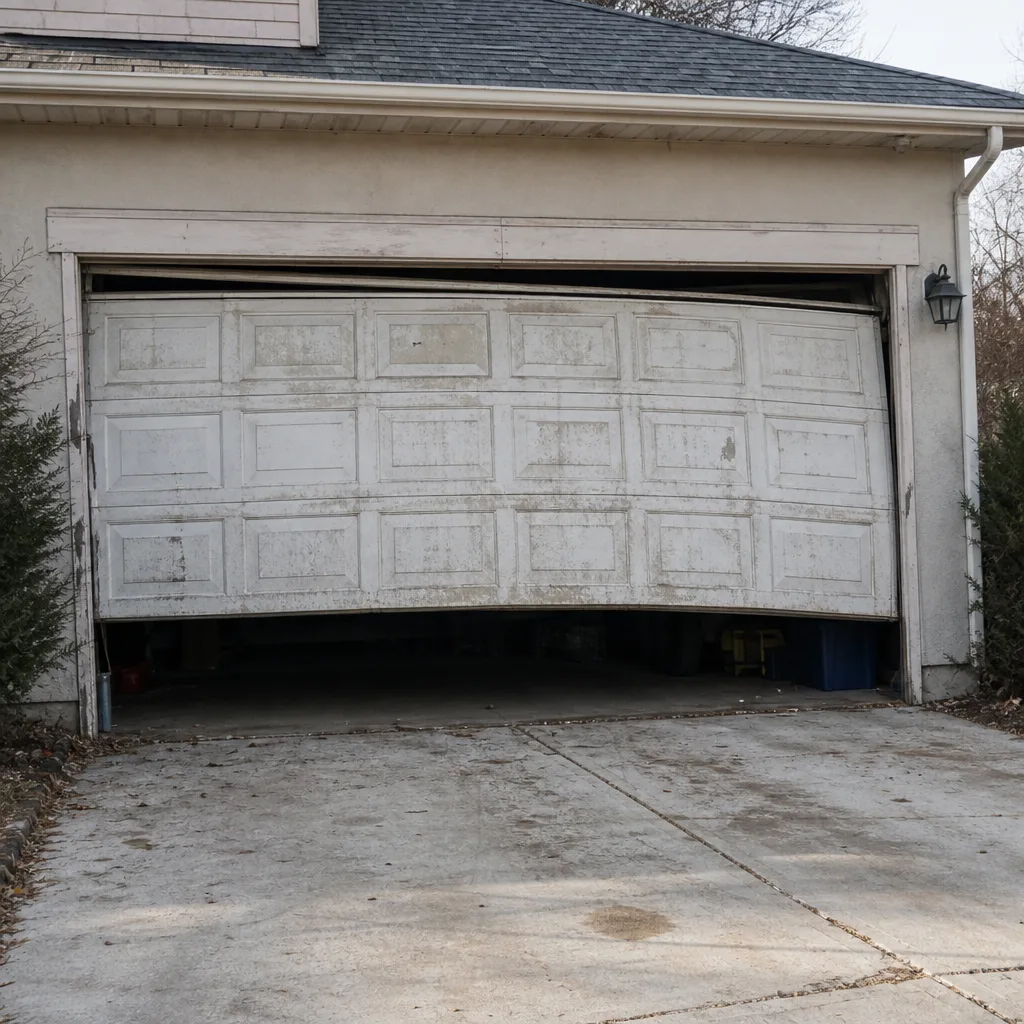
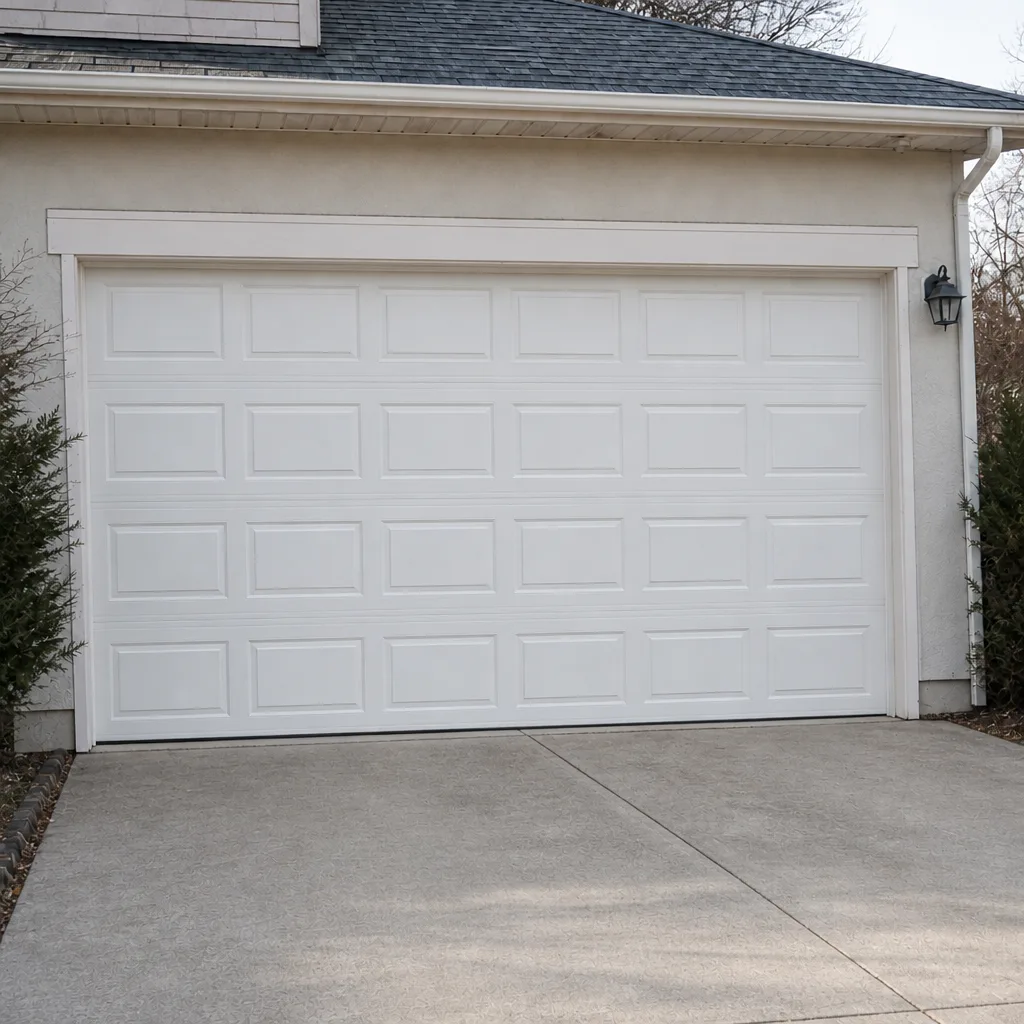
See the difference
 Before
 After
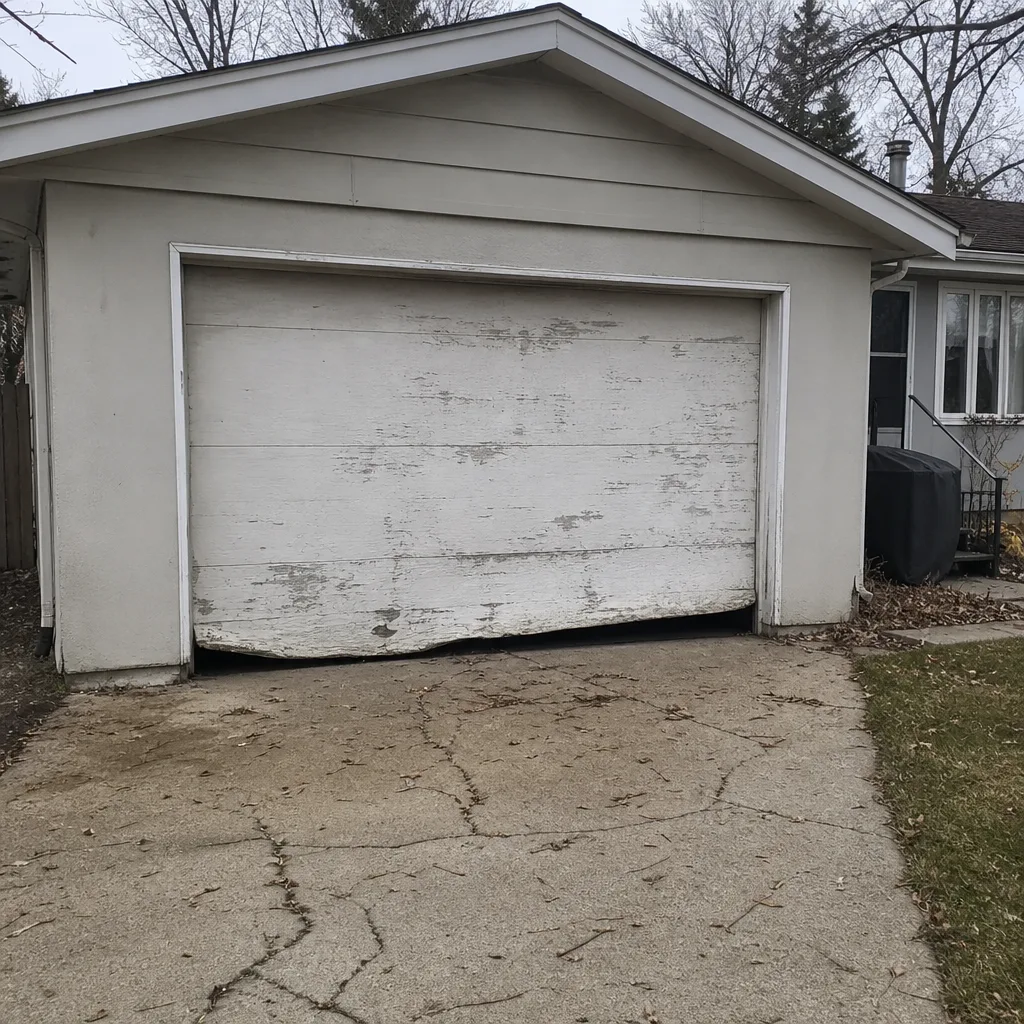 Before
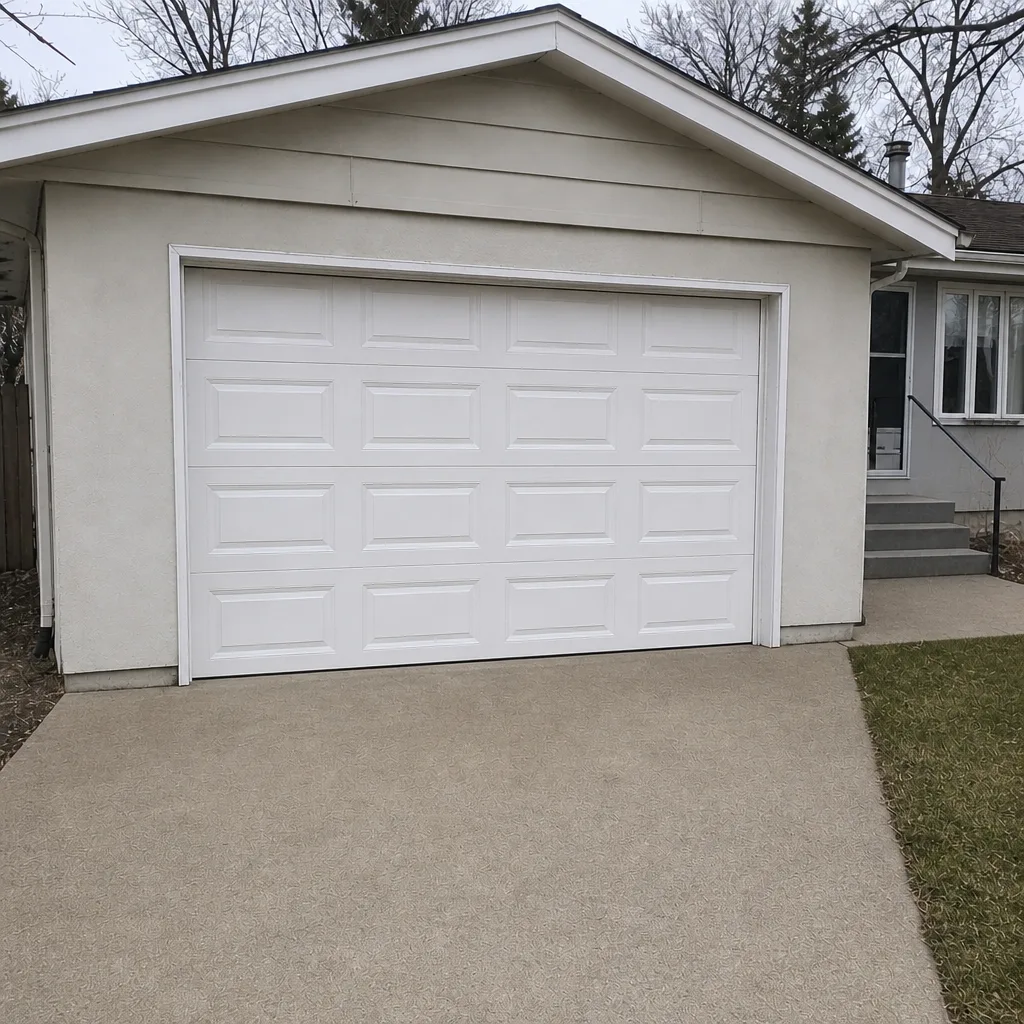 After
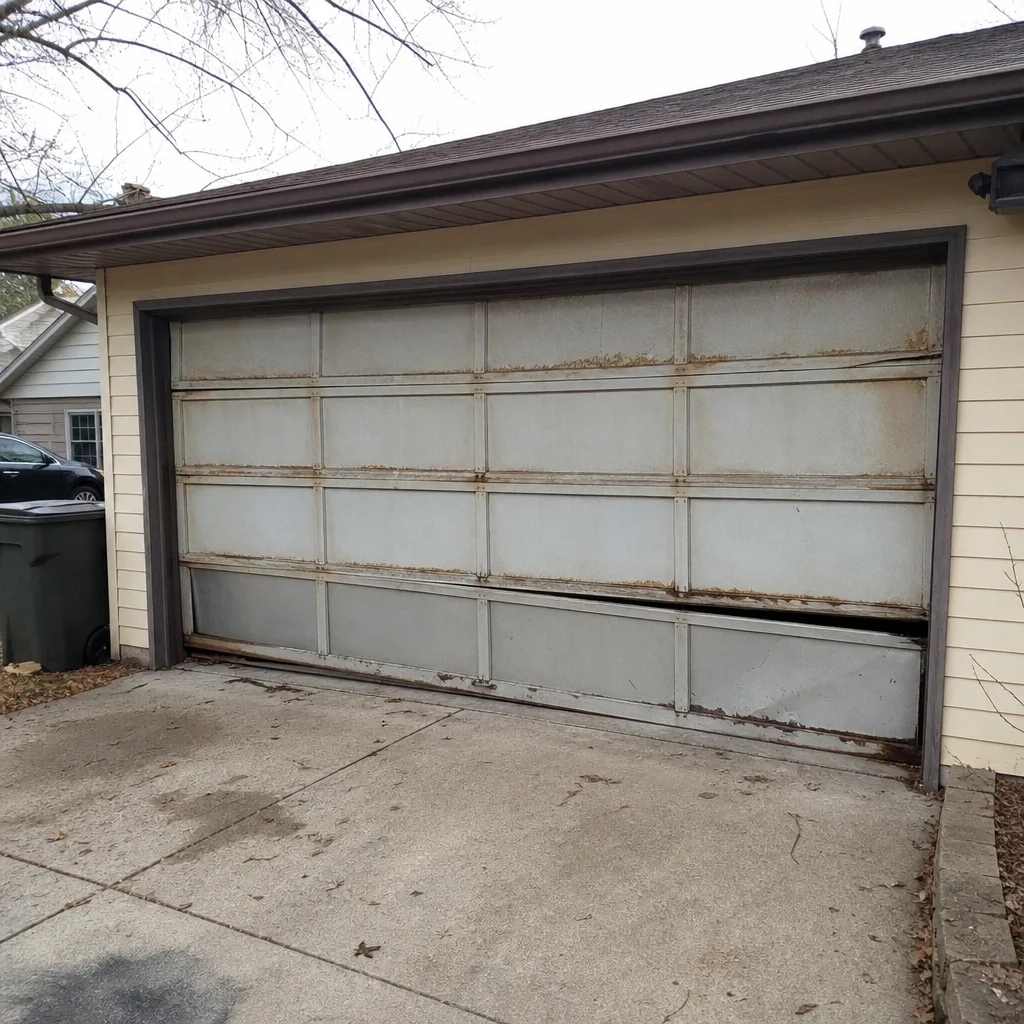 Before
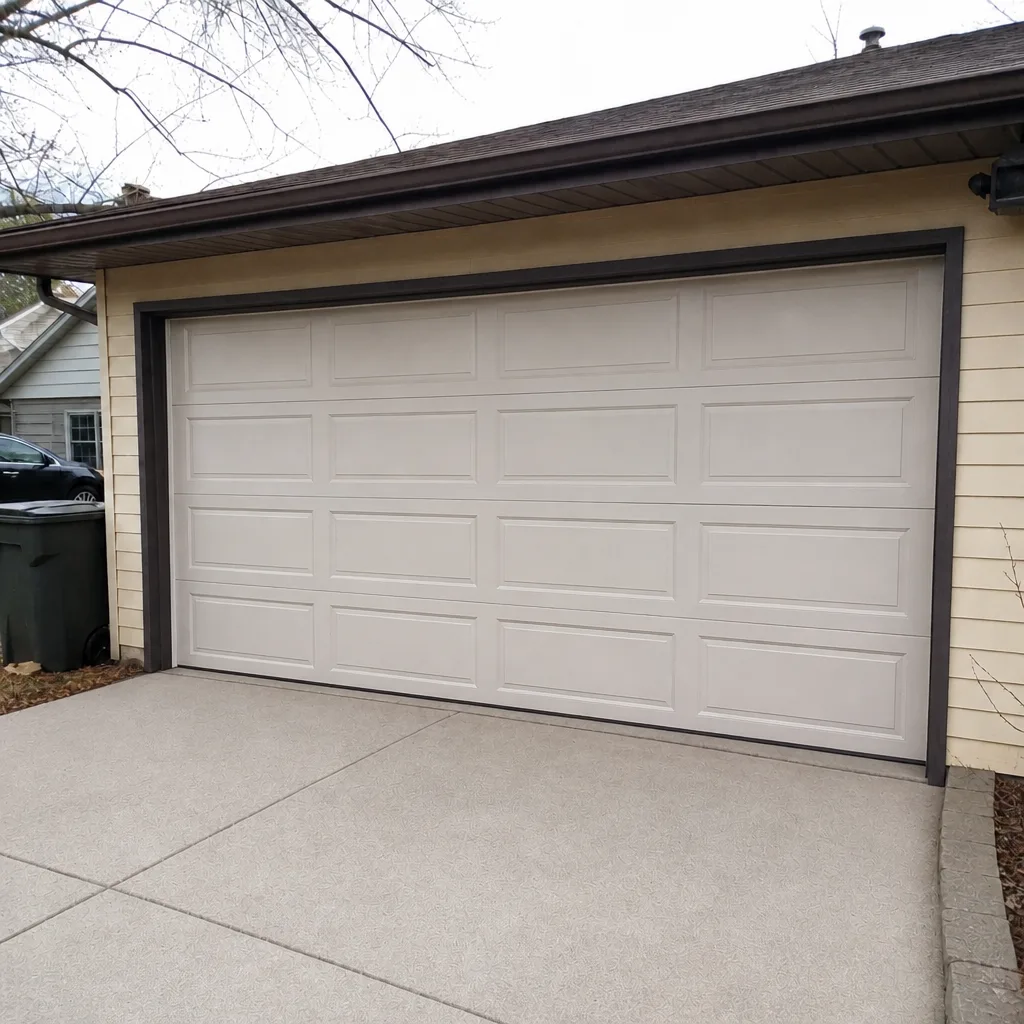 After
When to Call a Professional
Some situations are clearly one way or the other. Call us if a spring has visibly failed, if the door hangs crooked, if a cable has snapped or frayed, if the door is stuck open or jammed shut, or if the opener runs but the door doesn’t move. Those are the cases where the math flips and professional handling is the cheaper, safer choice. Even for less urgent problems – a door that’s gotten heavy, a grinding opener, weatherstripping you’d rather not wrestle with – a quick assessment before you start buying parts is smart. Our technicians have up to 12 years of experience, and they diagnose most repairs and can often complete them in a single visit. Garage Door Repair Uptown offers free estimates in Uptown – call (855) 337-1679 and we’ll give you a written price before any work starts.
Frequently Asked Questions
We don’t recommend it. Torsion and extension springs hold stored energy that can release violently with no warning, and the correct tools and sequence matter more than most DIY guides admit. That’s why spring repair is a professional job, and it’s one we take seriously as a core service. If a spring has failed, keep everyone away from the door and call us at (855) 337-1679 for a free estimate.
Weatherstripping, lubrication, safety sensor alignment, and visual inspection are all genuinely safe for a careful homeowner. Testing the auto-reverse and cleaning the tracks are also fine. The line is load-bearing hardware – springs, cables, and brackets – where the risk is disproportionate to the savings. If you’re not sure which side a task falls on, ask before you start.
Uptown’s housing stock is old enough that many garages have custom door sizes, mixed-era hardware, or tight clearances that national guides don’t account for. Off-the-shelf replacement parts often don’t fit cleanly, and on a load-bearing component, a slightly wrong fit is dangerous. Cold winters also fatigue springs faster here. When the setup is non-standard, having a specialist handle the risky parts is the safer bet.
Spring repair pricing depends on the spring type and whether it’s a single spring or a matched pair, and we’ll give you a written quote before any work starts. The estimate is the price – you won’t get a surprise invoice. Call (855) 337-1679 and we’ll walk you through the range for your door.
Anyone near the door could be injured, and a partially released spring or a door left unbalanced can damage panels or overload the opener. Finishing a failed install is also more involved than starting clean, so a professional extraction usually costs more than the original repair would have. The safest move if a spring job is mid-failure is to stop, keep people clear, and call for help.
Yes. We’re factory-familiar with LiftMaster, Chamberlain, Genie, Clopay, Amarr, Wayne Dalton, Craftsman, and Raynor, so older and mixed-era systems are routine for us. If you’re unsure what brand or door you have, we can identify it during the visit and spec the right parts. Call (855) 337-1679 for a free estimate.
The Bottom Line
The DIY-versus-professional question for a garage door isn’t really about whether you’re handy. It’s about which tasks carry risk out of proportion to the money you’d save, and spring work sits squarely on the far side of that line. Weatherstripping, lubrication, sensor alignment, and inspection are yours to keep. Springs, cables, and structural hardware deserve a specialist, especially in Uptown garages with older, non-standard setups. Use a professional visit to handle the dangerous work and coach you on what to maintain, and you get the best of both: safety where it counts and savings where they’re real. When you’re ready, call Garage Door Repair Uptown at (855) 337-1679 for a free estimate and a written price before any work starts.
Written by the team at Garage Door Repair Uptown.